Dressed for Yourself: The Quiet Power of Getting Ready When Nobody's Coming Over
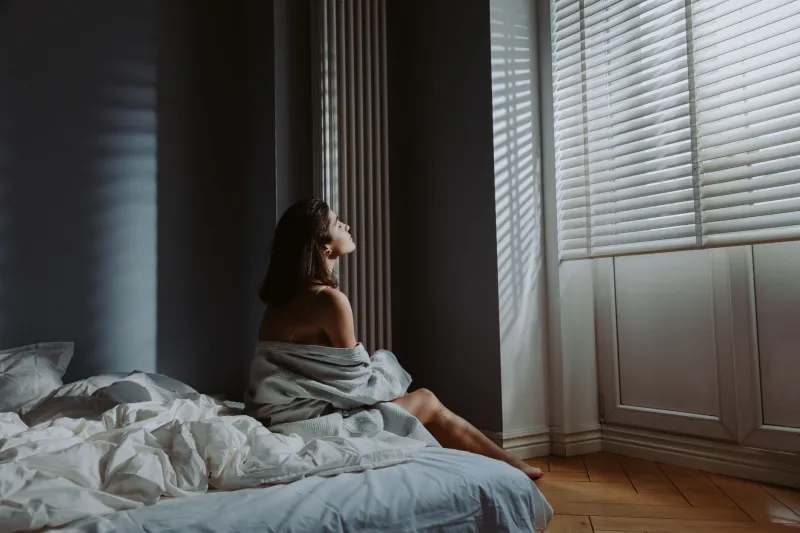
There's a particular kind of Tuesday that most of us know well. No meetings on the calendar. No plans materializing after dark. Maybe you're working from home, or running errands, or just existing inside the four walls of your apartment with nowhere specific to be. And so you stay in whatever you slept in, or you reach for the most forgettable sweatpants in the drawer, and the morning passes without ceremony.
That's not a judgment. It's just a pattern—and patterns, once you notice them, become interesting.
Because here's what's quietly true: the way you dress when no one is watching is probably the most honest version of how you feel about yourself. Not the outfit you assembled for a first date or a job interview or a dinner where you knew you'd run into your ex. Those clothes are performances, carefully cast. The Tuesday sweatpants, or the intentional linen shirt you chose anyway—that's the real data.
The Psychology of Dressing for an Audience of One
Researchers have spent a surprising amount of time thinking about the relationship between clothing and cognition. A concept called enclothed cognition—explored by psychologists Hajo Adam and Adam Galinsky—suggests that what we wear doesn't just signal identity to others; it actively shapes how we think and feel about ourselves. The clothes carry symbolic meaning, and when we put them on, we absorb some of that meaning into our own sense of self.
In short: you don't just wear your mood. You can make your mood by what you wear.
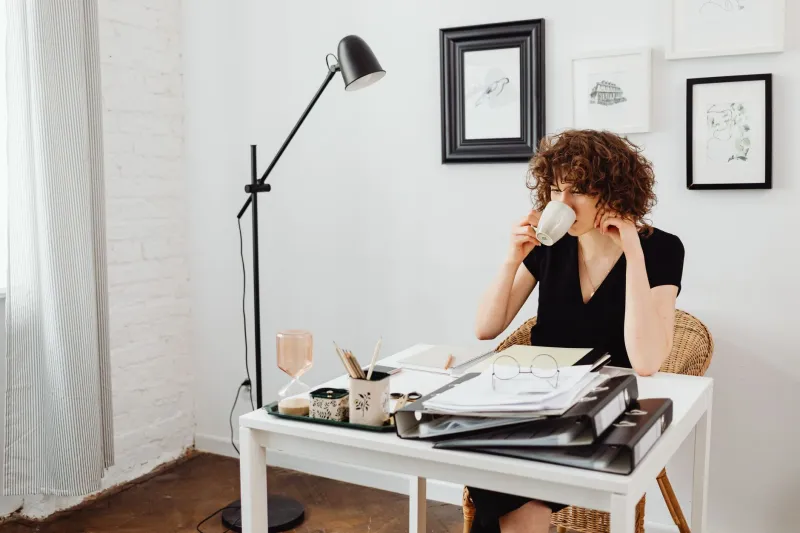
This is why so many people who work from home report that changing out of pajamas—even into something casual but chosen—shifts their mental state in a way that's hard to articulate but impossible to ignore. It's not about looking polished for a Zoom call. It's about the act of deciding, of showing up for the day with some small degree of intention. The clothes become a cue, a signal to your own nervous system that the day has begun and you are, in some meaningful sense, ready for it.
The Difference Between Dressing to Be Seen and Dressing to Feel
Most of us learned to dress outward. We were taught, implicitly or explicitly, that clothing is about legibility—about communicating status, belonging, attractiveness, professionalism. The right jeans for the right crowd. The dress that says I put in effort without screaming I tried too hard. Clothing as social currency.
And that's real. Clothes do communicate. But when that's the only framework we operate from, something quietly goes sideways. We stop asking what we want to wear and start asking what we should wear. We lose the thread back to our own taste, our own comfort, our own sense of what feels like us.
Dressing for an audience of one—for a day when literally no one will see what you chose—strips that framework away entirely. There's no one to impress and nothing to signal. The only question left is: what do I actually want to put on my body today? What feels right? What makes me feel like myself, or like the version of myself I'm trying to grow into?
That question, asked consistently, becomes a practice in self-knowledge.
Ritual as a Form of Respect
Think about the rituals you keep for other people. You clean the house before guests arrive. You dress up for celebrations. You make the good coffee when someone comes over for brunch. These acts of care are lovely—but notice how rarely we extend them to ourselves, unprompted.
Getting dressed with intention on a solitary day is a version of making the good coffee for yourself. It's an act that says: my experience of this day matters. Not because anyone will witness it, but because I will live it.
This isn't about elaborate outfits or expensive clothes. A well-worn flannel shirt that you genuinely love, pulled on deliberately rather than grabbed half-asleep, counts. The ritual isn't about aesthetics. It's about the moment of choosing—of pausing, however briefly, to make a decision that honors where you are and who you're trying to be.
Some people find that this small act anchors the whole morning. When they skip it, the day feels looser, less defined, harder to get traction on. When they keep it, even simply, things seem to fall into better order—not because clothes have magic, but because intention is contagious. One deliberate choice tends to invite another.
What Your Solitary Wardrobe Actually Reveals
If you want a fairly honest read on your relationship with yourself, spend a week paying attention to what you wear on your lowest-stakes days. Not with judgment—just with curiosity.
Are you reaching for things that make you feel good, or just things that are easy? Is there a gap between the clothes you wear for others and the ones you live in alone? Does that gap feel like freedom, or does it feel like neglect?
For a lot of people, there's a striking split. The public wardrobe is considered, even curated. The private wardrobe is an afterthought—a collection of things too worn-out to wear out, kept around for the days when nobody's looking. And while there's nothing wrong with comfort, there's something worth examining in the idea that our private selves deserve only the leftovers.
What would it mean to dress your private self with the same care you bring to your public one? Not identically—you don't need to wear heels to make breakfast—but with the same underlying attitude of: you matter enough to be considered.
Starting Small, Staying Honest
None of this requires a wardrobe overhaul or a Pinterest board. It just requires a small shift in attention.
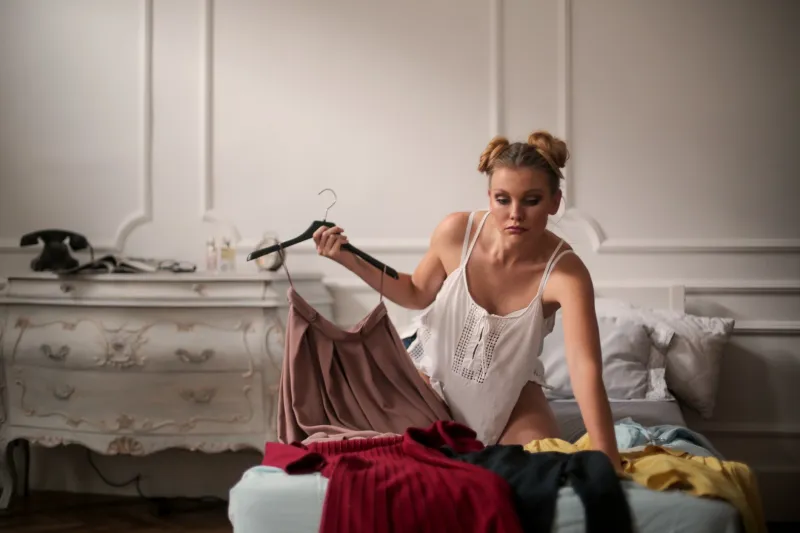
Maybe it's as simple as, tomorrow morning, pausing before you grab the first thing you see and asking yourself one question: what do I actually want to wear today? Not what's easiest, not what's already out—what do you want? Then wearing that thing, even if it takes an extra two minutes to find.
Or maybe it's about retiring the clothes you keep only for the days no one sees you—the ones that make you feel invisible or unfinished—and letting your at-home wardrobe reflect the same values as the rest of your life.
The goal isn't to aestheticize every moment of your existence. It's to close the gap between how you show up for others and how you show up for yourself. Because you spend more time with yourself than with anyone else. You are, in a very real sense, the most important audience your life has.
Dress accordingly.