Set the Table, Set the Tone: The Secret to Hosting Dinners People Actually Remember
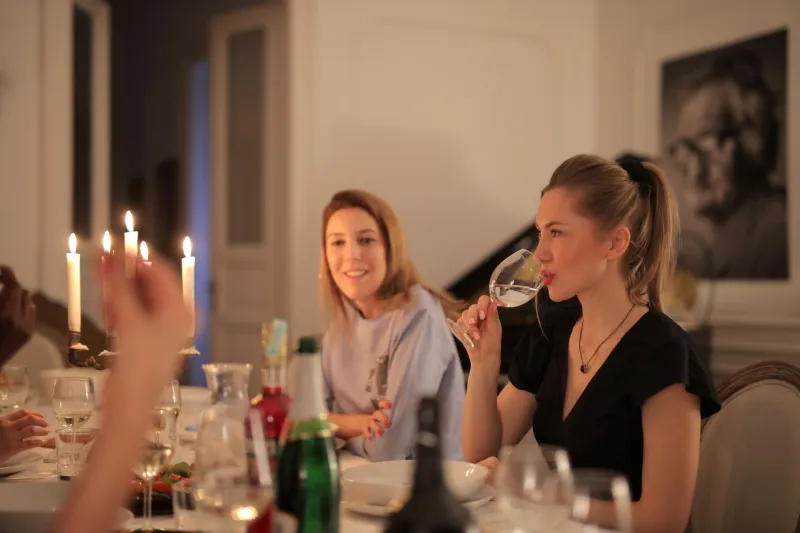
There's a particular kind of magic that happens when eight people sit down together, phones face-down, wine poured, and someone asks a question nobody expected. The conversation shifts. Guards drop. By the time dessert arrives, something real has passed between everyone at the table — the kind of thing that doesn't happen on a group text, no matter how many fire emojis get thrown around.
This isn't an accident. The best dinner hosts know something the rest of us are slowly learning: gathering people is a craft. And like any craft, it can be studied, practiced, and refined.
Why Dinner, Why Now
We are, statistically speaking, lonelier than we've ever been. The U.S. Surgeon General's 2023 advisory on the loneliness epidemic made headlines, but for many people, it confirmed something they already felt in their chest — a vague, persistent sense that their connections are wide but not particularly deep. We follow each other online. We celebrate milestones in comment sections. We schedule coffee dates we keep rescheduling.
The dinner party, for all its old-fashioned connotations, is quietly having a moment precisely because it pushes back against all of that. It's analog. It's slow. It demands presence. And research in social psychology consistently shows that vulnerability, shared meals, and sustained face-to-face time are three of the most reliable pathways to genuine intimacy.
So how do you actually engineer that? Carefully, and with a lot of intention — but not so much that it feels engineered.
The Guest List Is the First Design Decision
Before you think about the menu or the playlist, think about the people. The most transformative dinner gatherings aren't necessarily the ones with the most interesting individuals in the room — they're the ones where the mix creates unexpected chemistry.
Maria Vasquez, a Los Angeles-based ceramicist who hosts monthly dinners for a rotating group of twelve, puts it simply: "I think of it like a band. You don't want five lead guitarists. You want people who can listen as well as they can talk."
Aim for variety — in profession, in perspective, in personality — but keep the group small enough that everyone can hear each other. Six to ten people tends to be the sweet spot. Any more and the table fractures into separate conversations that never reconnect.
The Room Itself Does Half the Work
Environment is a social cue. A harshly lit dining room with a long, formal table tells guests to behave. Candlelight, soft music, and a table that's close enough to encourage leaning in tells them something else entirely.
Low, warm lighting is your single most powerful tool. It signals safety in a way that's almost primal — we're biologically wired to associate firelight with intimacy and rest. Pair that with a table that isn't too precious (mismatched chairs, a linen runner with a little character, seasonal flowers you picked up at the farmers market rather than a florist) and you communicate: relax, this is a real home, not a performance.
Scent matters too, though it's often overlooked. Something simmering on the stove before guests arrive — a braise, a pot of spiced cider, even just garlic in olive oil — activates memory and comfort in ways that even the most carefully curated playlist can't quite match.
Cooking as a Ritual, Not a Flex
The menu doesn't need to be impressive. It needs to be generous. There's a real difference.
Dishes that require guests to pass things, to tear bread, to ladle their own portions — these are participatory acts that create small moments of exchange. A roast chicken, a big bowl of pasta, a grain salad with a dozen toppings on the side: these are foods that say come closer. A plated, three-course tasting menu can be beautiful, but it also keeps the host in the kitchen and the guests in their seats, waiting.
If you're cooking for people you want to know better, cook something you love and know well. The confidence it gives you — the freedom to actually sit down and be present — is worth more than any dish you'd spend the whole evening anxious about.
The Conversation Doesn't Start Itself
This is where most hosts lose the thread. They assume that putting interesting people in a room together will naturally produce interesting conversation. Sometimes it does. More often, it produces small talk that never quite breaks through the surface.
The simplest intervention is a question — placed on a card at each seat, slipped into the dinner itself, or simply offered by the host at the right moment. Not a party game, not an icebreaker with a cheesy name. Just a real question that invites a real answer.
Some favorites from experienced hosts: What's something you changed your mind about this year? What are you in the middle of right now — personally, creatively, professionally? What's a decision you made that scared you?
These aren't therapy prompts. They're invitations. And when the host answers first — genuinely, without performing — it gives everyone else permission to do the same.
David Park, a Brooklyn-based writer who hosts a quarterly dinner he calls "the gathering" (lowercase, intentional), says he always shares something real before he asks anyone else to. "If I go first and I'm actually honest, the whole night changes. People stop trying to be impressive and start trying to be true."
Protecting the Space
Phone baskets are polarizing, but the instinct behind them is right. You don't have to be heavy-handed about it — most guests, when asked warmly and with a little humor, are relieved to put their devices away. What you're really doing is removing the escape hatch. When there's nowhere to retreat, people tend to show up.
Also worth considering: when to end the evening. A dinner that goes on too long loses its shape. Two and a half to three hours is often the sweet spot — long enough to go deep, short enough that people leave wanting more. The best gatherings end before anyone is ready for them to.
What You're Really Hosting
At its core, intentional hosting is an act of belief — a belief that the people around your table are worth the time, the candles, the careful question. That real friendship requires more than proximity and shared history. That depth is something you have to make space for.
The table is just the beginning. What happens around it is up to you.