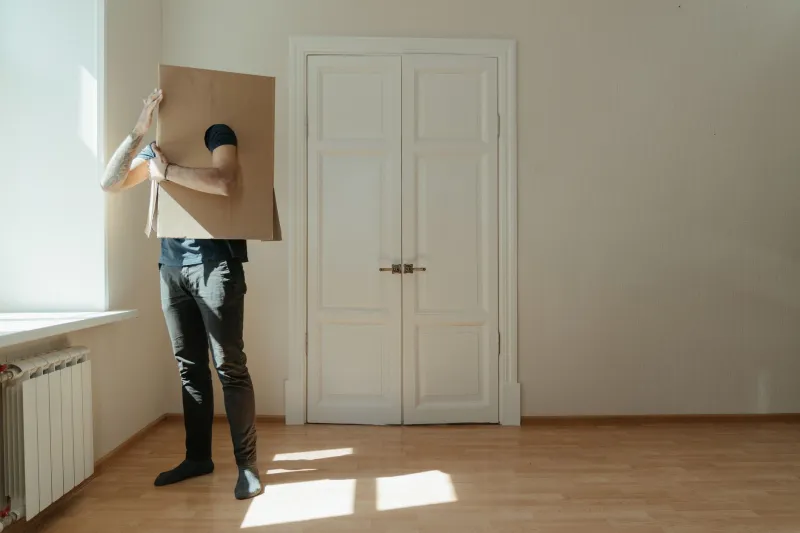
Clear Floors, Clear Head: What Stripping Back Your Space Does to Your Mind
There's a particular kind of exhaustion that has nothing to do with sleep. You walk into your apartment after a long day, drop your keys on the counter, and feel it immediately — that low-grade visual hum of stuff. The chair draped in clothes you haven't touched in weeks. The bookshelf that's less library and more landfill. The side table that exists, apparently, to collect mail you're not ready to open.
None of it is dramatic. None of it is a crisis. But it adds up, quietly, in ways that researchers are only beginning to fully map.
What the minimalist design movement got right — even if it occasionally went too far, into cold, uninhabitable territory — is that your environment isn't neutral. It's in constant conversation with your nervous system. The question worth asking isn't how little can I own? It's what actually deserves to be here?
Your Brain Is Reading the Room (Whether You Want It To or Not)
Cognitive scientists have a term for it: visual noise. Every object in your field of vision is a micro-demand on your attention — a small, persistent signal your brain has to process and file. Most of the time, you're not consciously aware of it. But collectively, across a cluttered room, those signals accumulate into something researchers at Princeton's Neuroscience Institute have linked to reduced focus, elevated cortisol, and a general sense of low-level overwhelm.
Put more plainly: your brain is working harder in a crowded room than you think.
This doesn't mean you need to live like a monk. It means there's a real cognitive cost to filling space just because space exists. That extra armchair nobody sits in, the decorative ladder leaning against the wall holding blankets you never use — they're not harmless. They're small, quiet demands you're paying without realizing it.
Clearing them doesn't just make a room look better. It gives your mind somewhere to exhale.
The Difference Between Sparse and Sterile
Here's where a lot of people get tangled up. Minimalism, as it's been sold to us through Pinterest boards and Scandinavian furniture catalogs, can look almost punishing. White walls, concrete floors, a single plant. Beautiful in photographs. Genuinely uncomfortable to live in.
That's not the goal.
The goal is intentionality — a word that gets overused but still earns its place here. An intentional space isn't one that's been emptied. It's one where every object has passed a quiet internal interview. Does this anchor me? Does it serve something — function, memory, genuine pleasure? Or is it just occupying square footage I'm paying for?
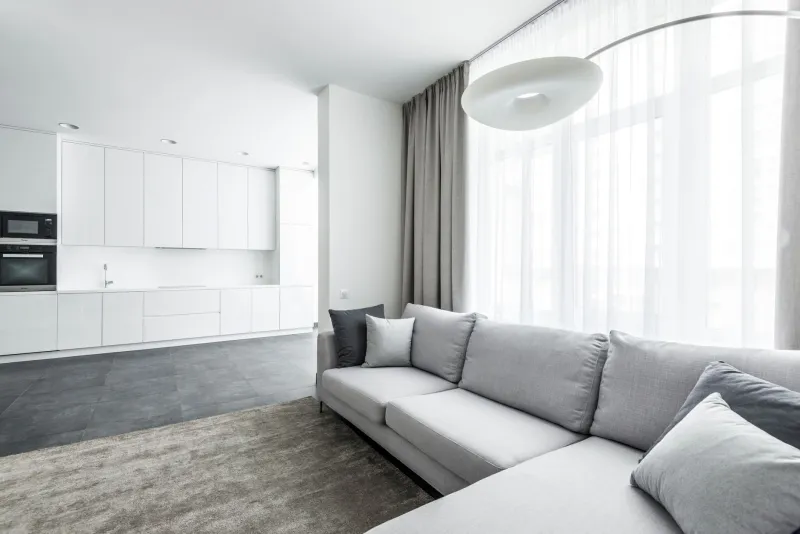
There's a meaningful difference between a living room with one well-chosen sofa, a lamp that actually lights the room properly, and a few books you're genuinely reading — and a living room that's been hollowed out in the name of aesthetics. Warmth matters. Texture matters. The coffee table your grandmother refinished matters. What doesn't matter, at least not in the way we tell ourselves it does, is the impulse buy, the placeholder furniture, the things we keep because getting rid of them feels like a decision we're not ready to make.
Starting With the Furniture
If you want to experiment with this, furniture is the highest-leverage place to begin. Not accessories, not the junk drawer — furniture. Because furniture defines the bones of a room. It determines how you move through a space, where your eye lands, and whether a room feels like somewhere you want to be or somewhere you're just passing through.
A few practical starting points:
Audit the seating. Most American living rooms have more seating than the household will ever use simultaneously. That extra chair — the one that's become a de facto storage surface — is almost certainly working against you. Consider whether your space would breathe better without it.
Let walls be walls. There's enormous pressure, particularly in the age of gallery walls and maximalist interiors trending on social media, to cover every vertical surface. But empty wall space isn't a design failure. It's visual rest. One piece of art you genuinely love does more for a room than eight pieces you're ambivalent about.
Question the surface-to-object ratio. Shelves exist to hold things, but they don't have to hold everything. A shelf with room to spare — where objects have actual breathing room around them — feels considered. A shelf packed end to end feels like a storage problem.
Think in terms of negative space. Designers use this term to describe the intentional emptiness around objects. Negative space isn't wasted space. It's what allows the things that remain to actually register.
What You're Really Making Room For
Here's the part that doesn't show up in interior design guides: when you strip back a space, you don't just get a cleaner room. You get a room where thinking feels different.
Ideas have somewhere to land. Conversations go longer. You notice things — the quality of afternoon light across your floor, the way a plant is growing toward the window, the particular quiet of a Sunday morning — that were always there but previously buried under visual static.
This is what people who've made these changes often report, and it's harder to quantify than storage solutions or square footage. A deliberate space becomes a space where you actually inhabit your life instead of just moving through it.
There's something almost political about it, too, in the best sense. We live in a culture that relentlessly equates accumulation with success — more rooms, more furniture, more things staged just so for a life that looks full. Choosing to curate rather than accumulate is a quiet form of pushback. It says: I know what I actually need. I'm not performing abundance. I'm living in it.
The Objects That Earn Their Place
None of this means getting ruthless about everything. Some objects are genuinely worth keeping not because they're useful but because they're true — true to who you are, where you've been, what you care about.
The test isn't Marie Kondo's famous spark of joy, though that's not a bad starting point. It's more like: does this object mean something, or does it just exist? Does it reflect the life you're actually living, or the life you were living three years ago, or the life you imagined you might live someday?
The things that stay should earn their square footage. Not by being expensive or impressive, but by being genuinely yours.
Everything else is just furniture. And furniture, it turns out, you can live without a lot more of than you thought.