Too Many Doors: How the Illusion of Endless Choice Is Quietly Exhausting Us
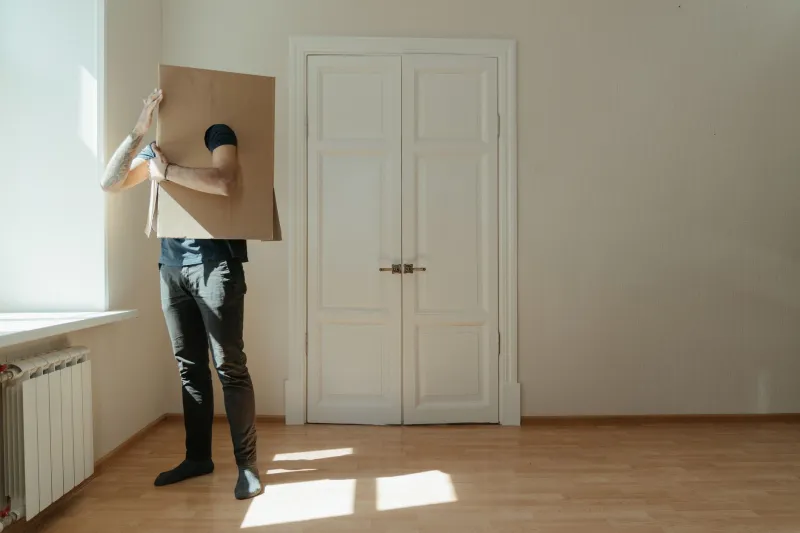
Somewhere around the third time you've scrolled through an entire streaming platform without picking anything, you start to sense that something has gone wrong. Not dramatically wrong — no crisis, no emergency. Just a dull, creeping dissatisfaction that settles in like bad weather. You had every option available to you. You chose nothing. And somehow you feel worse than if you'd had no choice at all.
Welcome to the paradox of choice. It's not a new idea — psychologist Barry Schwartz wrote the book on it back in 2004 — but it's one that has aged into something almost prophetic. We now live in a world that has taken every conceivable dimension of life and infinite-scrolled it into oblivion. Streaming. Dating. Food delivery. Career paths. Even wellness — the space supposedly designed to calm us down — has become a labyrinth of competing philosophies, apps, and supplements, each one promising to be the thing that finally makes you feel okay.
The result? A generation of thoughtful, curious people who are, paradoxically, more paralyzed than ever.
The Brain Wasn't Built for This
Here's the thing about decision fatigue: it doesn't announce itself. It doesn't tap you on the shoulder and say, hey, you've made forty-seven micro-decisions today and you're running on fumes. It just quietly degrades your capacity to choose well — or to feel good about the choices you do make.
Research out of Columbia University found that shoppers presented with six jam options were ten times more likely to make a purchase than those who saw twenty-four. More options, fewer decisions. The brain, it turns out, has a finite amount of decision-making fuel, and when that tank runs low, we default to avoidance, impulsivity, or — the modern classic — endless scrolling without committing.
This isn't a willpower problem. It's a design problem. And increasingly, it's a cultural problem.
We've built an entire value system around optionality. Keeping your options open. Never settling. Always upgrading. It sounds like freedom. But psychologically, it functions more like a trap — because when every door stays open, you never fully walk through any of them.
Dating Apps and the Myth of the Perfect Match
Nowhere is this more visible than in modern dating. Apps like Hinge and Tinder have gamified the search for connection in a way that's fundamentally at odds with how intimacy actually works. Instead of deepening a relationship with someone imperfect but real, users are conditioned to swipe away at the first sign of friction — because somewhere in that infinite stack of profiles, maybe there's someone better.
Sociologist Sherry Turkle has written extensively about how technology changes not just how we communicate, but what we expect from connection. When choice is infinite, commitment starts to feel like a concession. Like you're giving something up rather than gaining something.
The irony is brutal: the very tools designed to help us find love are training us to be worse at it.
Why Constraint Feels Like Relief
There's a reason people romanticize eras before algorithmic everything. A town with one diner. Three TV channels. A record store where you bought whatever was in stock. Constraint, it turns out, isn't just a limitation — it's a form of curation. It does the cognitive work for you, and in doing so, it frees you up to actually experience the thing you've chosen rather than second-guessing it.
This is the philosophy behind capsule wardrobes, prix-fixe menus, and curated subscription boxes. It's why some of the most creative people in history — from Steve Jobs to Matisse — famously simplified their daily choices to protect their mental energy for the work that mattered.
Constraint, when it's intentional, becomes a kind of permission. Permission to stop looking and start living.
Practical Ways to Narrow Your World (On Purpose)
You don't have to go off the grid to reclaim some peace. Small, deliberate limitations can create surprising relief.
Choose your defaults. Pick a few things — a go-to coffee order, a rotation of five dinner recipes, a streaming watchlist you actually commit to — and remove those decisions from your daily rotation. Defaults aren't lazy. They're strategic.
Limit your inputs. Whether it's dating apps, news sources, or shopping sites, try limiting yourself to one or two rather than maintaining ten. Depth over breadth. You'll be surprised how much mental space opens up.
Practice the 'good enough' reframe. Psychologist Barry Schwartz distinguishes between maximizers (people who need the best option) and satisficers (people who choose once something meets their criteria). Satisficers, research shows, are consistently happier. Not because they settle, but because they've decided that good enough actually is good enough.
Make the choice, then close the door. Once you've decided — on a restaurant, a relationship, a job — consciously stop entertaining alternatives. This isn't denial. It's a form of respect for your own decision.
Audit your subscriptions. Not just streaming — everything. How many apps, services, and platforms are you maintaining just in case? Every open loop costs you something. Close a few.
Gathering What Actually Matters
There's something worth sitting with here. The impulse to keep all your options open often comes from fear — fear of missing out, fear of being wrong, fear of committing to a version of life that might not be the best one available.
But the best version of your life isn't found by keeping every door cracked. It's built by walking through a few of them with your whole self.
Curation — real curation, not algorithmic curation — is an act of self-knowledge. It requires knowing what you actually value rather than what you're supposed to want. That's harder than it sounds in a culture that profits from your indecision.
But it's also, quietly, one of the most radical things you can do. Choose fewer things. Love them more. Close some doors. Notice how much lighter the hallway feels.