Fewer Clothes, More Freedom: The Case for Dressing Like You've Already Figured It Out
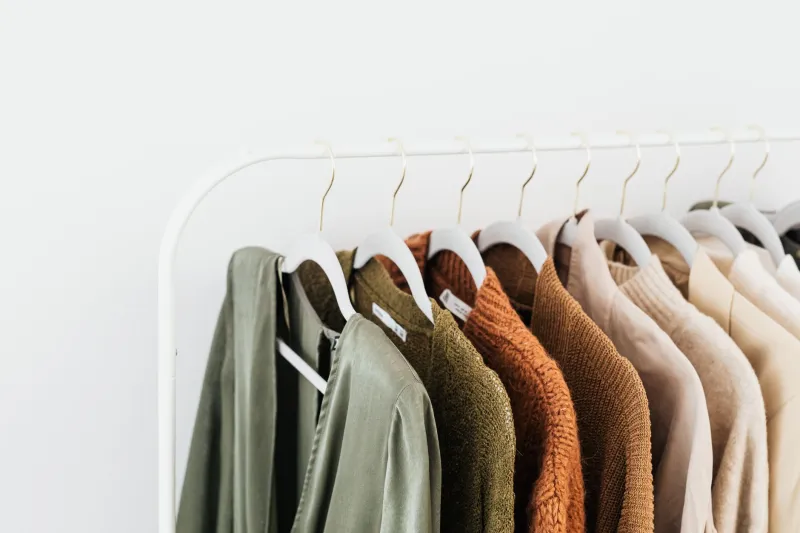
There's a closet in a Brooklyn apartment that contains exactly eleven pieces of clothing. Not eleven categories — eleven items. Two pairs of dark trousers, three fitted white shirts, two cashmere crewnecks in navy and charcoal, one blazer, one pair of straight-leg jeans, and a dress that works for nearly everything. The woman who lives there — a UX designer named Priya — spent years accumulating, editing, and re-accumulating clothes before she arrived at this number. She describes the moment she closed the closet door on a half-empty rail as "the first morning I got dressed without making a decision."
That feeling — the quiet exhale of a choice already made — is exactly what's drawing a growing number of people toward what's come to be known as uniform dressing. And it's worth paying attention to, because it turns out that wearing essentially the same thing every day isn't a failure of imagination. It might actually be the fullest expression of it.
The Decision Tax Nobody Talks About
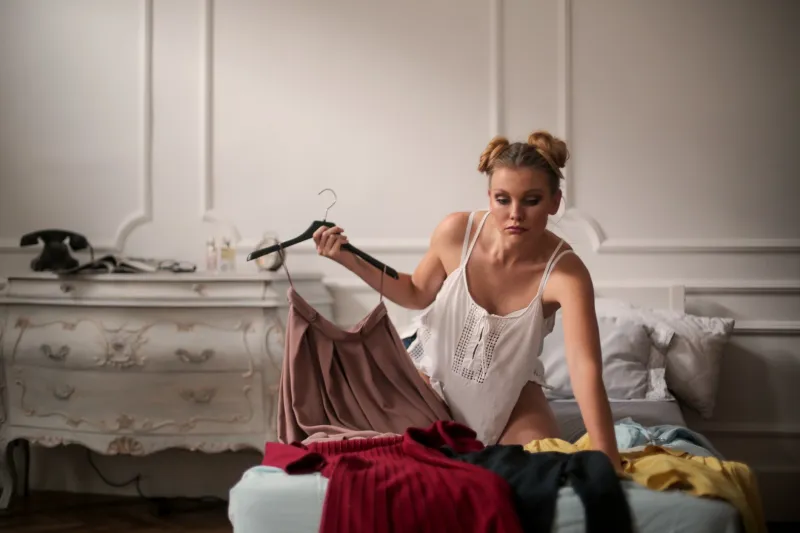
Psychologists have a term for the mental fatigue that accumulates from making too many choices: decision fatigue. It's well-documented and surprisingly democratic — it doesn't matter whether you're deciding what to wear or negotiating a contract. Your brain treats each choice as a withdrawal from a finite account, and by the time most of us have scrolled through our phones, planned our commutes, and stared into a closet full of options we don't quite love, we've already spent a chunk of cognitive currency before 8 a.m.
This is the quiet argument at the heart of uniform dressing: when you remove the daily negotiation between what you own and who you feel like being today, you reclaim something. Not just time, though that matters too. You reclaim a kind of mental spaciousness — room to think about what you're actually going to do with your day.
Steve Jobs wore the same black turtleneck. Barack Obama famously limited himself to gray or blue suits to "pare down decisions." These are the examples people always reach for, and yes, they're a little on-the-nose. But the principle holds regardless of whether you're running a country or a small business or just your own life: fewer micro-decisions upstream means more bandwidth for the things downstream that deserve your full attention.
What "Curated" Actually Means
Here's where uniform dressing separates itself from minimalism-as-deprivation. The goal isn't austerity. It's intention.
Priya spent almost six months arriving at her eleven pieces. She thought about color relationships, about what fabrics she actually wanted against her skin, about which silhouettes made her feel grounded versus distracted. She spent more money on each item than she ever had before — not because she was trying to signal anything, but because she was finally buying things she genuinely wanted to keep.
"I used to spend maybe $800 a year on clothes and still feel like I had nothing to wear," she says. "Now I spend more upfront, but I haven't bought anything new in fourteen months. And I love everything I own."
This is the paradox that surprises most people when they first encounter it: constraint generates satisfaction in a way that abundance rarely does. When your wardrobe is curated rather than accumulated, every single piece earns its place. There's no "maybe someday" section. No guilt about the unworn. No Sunday-night anxiety about what to put on for Monday.
The Identity Piece
There's something else happening here that goes a little deeper than logistics. For a lot of us, getting dressed has quietly become a performance — a daily exercise in signaling who we are, or who we want to be perceived as, or who we aspire to become. The closet becomes a kind of aspirational archive, full of versions of ourselves we haven't quite stepped into yet.
Uniform dressing asks you to let go of that. To decide, clearly and deliberately, who you actually are right now — and dress accordingly.
That sounds simple. It isn't. It requires a certain comfort with being known, with being recognizable, with not constantly updating your aesthetic as a way of staying interesting or relevant. In a culture that treats reinvention as a virtue and novelty as a form of vitality, choosing to look essentially the same every day is a quiet act of self-possession.
Marco, a landscape architect in Austin who's been wearing variations of the same outfit — olive chinos, a white or chambray shirt, leather boots — for the past three years, puts it this way: "People know what to expect from me visually, and that's actually freed me up to be more surprising in other ways. My ideas, my work, my conversations — that's where I want to be unpredictable."
Building Your Rotation (Without Losing Yourself)
If you're curious about trying this, the entry point isn't dramatic. You don't need to clear out your entire closet tomorrow or commit to a single color palette forever. Start by noticing what you actually reach for.
Most people, when they're honest with themselves, already have a de facto uniform — the same three or four combinations that feel right, that fit well, that don't require any convincing. Uniform dressing is really just the practice of making that pattern conscious, and then building toward it rather than around it.
A few things worth considering as you begin:
Invest in fit before anything else. A well-fitting $60 shirt will serve you better than a poorly-fitting $200 one. Tailoring isn't just for special occasions — it's what turns basics into the foundation of something genuinely elegant.
Choose a color story you can live inside. You don't have to go full monochrome, but a wardrobe where everything works together means you're never stuck with combinations that don't quite land.
Be honest about your actual life, not your aspirational one. If you work from home three days a week, build for that reality. If you live in a place with four distinct seasons, factor that in. The uniform should serve your life as it is.
Give it time. The first week of a simplified wardrobe can feel oddly exposing — like you've shown up to a party in the same outfit twice. That feeling fades. What replaces it is something that's harder to name but easier to feel: a quiet confidence that comes from knowing exactly who you are when you walk out the door.
The Real Luxury
We've been sold the idea that more options equal more freedom. That a closet stuffed with possibilities is a form of abundance worth having. But abundance and freedom aren't the same thing — and for a lot of people, the former has been quietly eating the latter for years.
The real luxury isn't having everything to choose from. It's having already chosen. It's walking to your closet in the morning and feeling nothing but ease. It's wearing something you genuinely love, again, without apology.
That's not poverty of imagination. That's what it looks like when you've finally gathered yourself — and decided that your energy belongs somewhere more interesting than deciding what to wear.