The Space Between: How Your Commute Can Become the Most Purposeful Part of Your Day
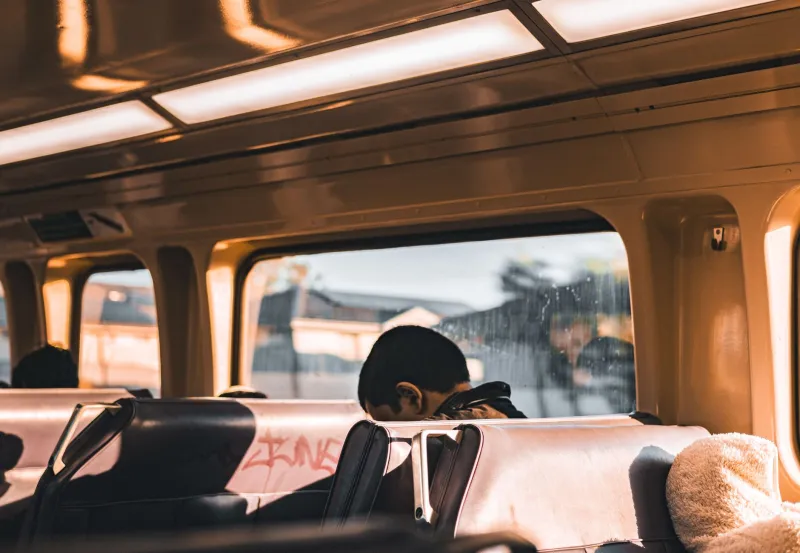
For years, Maya Okonkwo treated her forty-minute subway ride from Brooklyn to Midtown like a holding pattern. Headphones in, phone out, scrolling through whatever needed scrolling. She arrived at her desk already half-distracted, and left at the end of the day still carrying the residue of everything that had happened there. The commute, she figured, was just the price you paid for living somewhere worth living.
Then she lost her job, spent three months working from home, and discovered something unexpected: without the commute, she felt worse. Not better. Worse.
"I thought I'd love it," she says. "No more crowded trains, no more delays. But I started noticing I couldn't switch off at the end of the day. Work just bled into everything. There was no seam."
What Maya had stumbled onto — the hard way — is something researchers and psychologists have been quietly documenting for years: the commute, when treated with even a little intention, functions as a psychological threshold. A buffer zone between who you are at work and who you are everywhere else. Strip it away entirely, and something important goes missing.
The Science of the Transition
There's a concept in behavioral psychology called a "role transition ritual" — a deliberate act that signals to your brain that one mode of being is ending and another is beginning. Athletes use them before competition. Surgeons use them before entering the OR. Parents, therapists, teachers — anyone who moves between high-stakes roles throughout the day — benefit enormously from having a clear psychological handoff between those roles.
The commute, it turns out, is a naturally occurring version of exactly that.
A study out of Harvard Business School found that employees who used some portion of their commute for reflection — even just thinking through what they'd accomplished or what they were looking forward to — reported higher job satisfaction and felt more in control of their days than those who used the same time passively. The content of the reflection mattered less than the act itself. Just the deliberate turning of attention inward created a measurable shift.
The problem is that most of us have turned our commutes into extensions of the very stress we're supposedly traveling away from. We check email on the train. We listen to news podcasts that spike our cortisol before we've even had coffee. We white-knuckle through traffic while mentally rehearsing the conversation we need to have with our manager. We arrive — at work, or at home — having never actually left the last place.
What It Looks Like to Do It Differently
There's no single right way to reclaim your commute. That's actually the point. The goal isn't to optimize it — it's to own it.
For some people, that looks like music. Not background noise, but a deliberately chosen playlist that acts almost like a score for the transition. Marcus Reyes, a high school teacher in Chicago, keeps two playlists: one for the morning ride in, built around music that's expansive and a little energizing, and one for the ride home, slower and more spacious. "It sounds small," he says, "but it genuinely helps me land differently at each end. I'm not still at school when I walk through my front door."
For others, it's silence — or something close to it. Walking commuters, in particular, often report that simply resisting the urge to fill the time with audio creates a kind of mental composting. Ideas settle. Tensions soften. The day sorts itself out without you having to force it.
And for drivers navigating the particular particular chaos of American highway commuting, the shift might be more intentional: no phone calls, no talk radio, just the experience of being in the car. Some people find that commuting becomes one of the only true pockets of solitude in their day — a moving room of one's own, if you're willing to treat it that way.
The Identity Threshold
There's something almost philosophical about what a good commute does. It asks you to acknowledge that you are more than one thing.
You are a professional, yes. But you're also a partner, a friend, a parent, a person with a creative life and a body that needs feeding and a mind that needs rest. The commute is the doorway between those versions of yourself. When you blow through it unconsciously — phone glued to your hand, brain still running yesterday's meeting — you don't give yourself the chance to actually arrive anywhere.
This is part of why the return of the commute, post-pandemic, has felt genuinely complicated for so many people. Remote work flattened all those transitions. Some people thrived; many quietly didn't. The ones who struggled often described the same thing: an inability to fully inhabit any single role because all the roles had merged into one continuous, undifferentiated stream.
Recreating some version of a transition — even artificially, even just a ten-minute walk around the block before logging on — helped. The specific form mattered less than the intention behind it.
Small Shifts Worth Trying
If you want to experiment with this, here are a few entry points that don't require overhauling your entire routine:
Leave the news for later. Give yourself the first half of your commute before you let the world's noise in. Use that window for something that belongs entirely to you.
Pick one thing to arrive ready for. On the way in, spend a few minutes thinking about one thing you want to do well that day — not a to-do list, just one thing. On the way home, let yourself acknowledge one thing that actually went well.
Let boredom be productive. Resist the reflex to fill every quiet moment. Staring out a train window, watching a city move past you, is not wasted time. It's the kind of diffuse thinking that tends to produce your best ideas and your clearest feelings.
Mark the threshold. If you walk any portion of your commute, try picking a specific corner, a landmark, a particular block, as the spot where you consciously shift gears. It sounds almost too simple to work. It works.
The Journey as Practice
There's a reason so many wisdom traditions treat the journey as the point — not the destination. Not because arriving doesn't matter, but because the quality of your attention along the way determines who shows up when you get there.
Your commute is not dead time. It's not something to get through. It's a daily invitation to practice the kind of intentional transition that most of us never learned and all of us need — the art of actually leaving one place before you try to enter another.
Maya, for what it's worth, is back in an office now. New job, same subway line. But she rides it differently. Phone in her bag. Eyes up. Letting the city move past her like a kind of breathing. "I think about who I want to be when I walk in," she says. "And then I think about who I want to be when I get home. The train is where I figure out the difference."
That's not a commute. That's a practice.