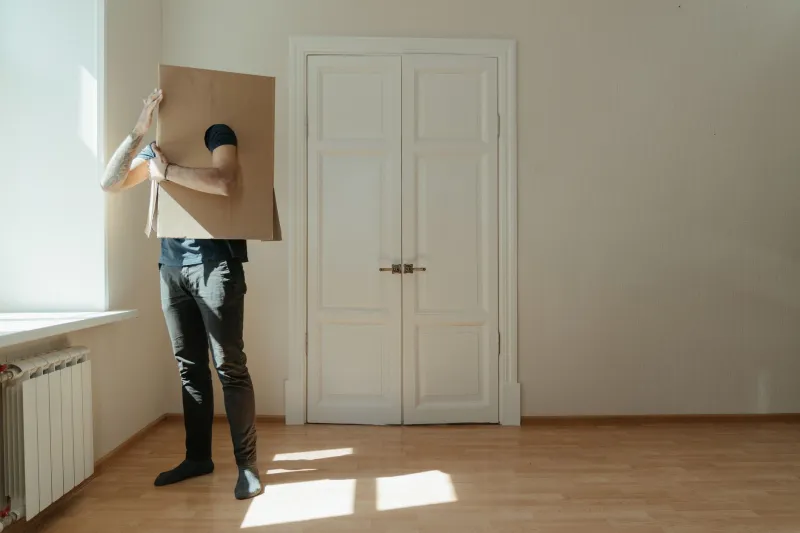
In Praise of Staring at the Ceiling: The Case for Doing Absolutely Nothing
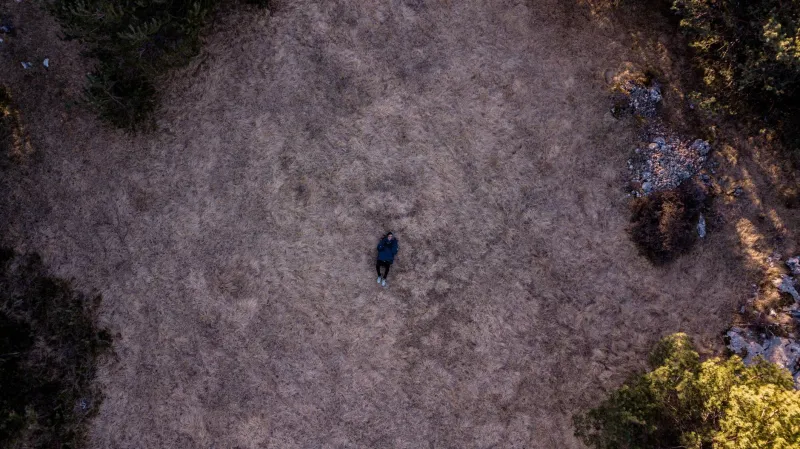
Let me describe a scene that used to be completely normal. You're sitting somewhere — a porch, a waiting room, a patch of grass — and you're not doing anything. Not listening to a podcast. Not checking your phone. Not journaling your feelings or running through tomorrow's to-do list. You're just... there. Watching a cloud. Listening to traffic. Thinking about nothing in particular.
For most of human history, this was called an afternoon. Now, in certain circles, it requires a therapist's note.
We have built a culture so saturated with productivity that idleness has become a source of genuine shame. The wellness industry — which should, in theory, be pushing back on this — has largely made things worse. We've replaced one form of striving with another. Now instead of grinding at work, we're grinding at self-improvement. Morning routines. Gratitude stacks. Optimized sleep cycles. Even rest has been turned into a performance.
But what if the most healing thing you could do today was nothing at all?
Boredom Has a Bad PR Problem
The word boredom carries a lot of baggage. We associate it with laziness, with childhood complaints, with something to be fixed or filled. But researchers who study the neuroscience of creativity have been quietly building a case for boredom as something closer to a superpower.
When your brain isn't actively focused on a task, it shifts into what neuroscientists call the default mode network — a kind of mental free-range state where memories get consolidated, disparate ideas connect, and the self does something it almost never gets to do in our overscheduled lives: wander.
This is where insight lives. It's where you suddenly understand why you're unhappy in your relationship, or realize the solution to a problem you've been stuck on for weeks, or remember who you were before you became so busy. Mind-wandering, it turns out, is not the opposite of thinking. It's a different kind of thinking — and one that modern life has nearly engineered out of existence.
The History of Doing Nothing (It's More Political Than You Think)
Here's something interesting: throughout history, the ability to be idle has been treated as a mark of status. Ancient Greek philosophers considered skholē — leisure, or freedom from work — essential for the examined life. The 19th-century leisure class quite literally built their social identity around not working. Even in mid-century America, the image of a man reading a newspaper on a Sunday porch, unhurried and unreachable, carried a kind of dignity.
That's not to romanticize historical inequality — access to leisure has always been unevenly distributed along lines of race, class, and gender in ways that deserve their own reckoning. But the underlying principle is worth reclaiming: unstructured time is valuable. Not because of what it produces, but because of what it allows.
Somewhere in the last few decades, we inverted this completely. Busyness became the status symbol. Packed calendars became proof of importance. And now we wear our exhaustion like a badge, competing not for who gets to rest but for who has the least time to do so.
What We Lose When We Fill Every Moment
There's a particular kind of self-knowledge that only comes from boredom. When every quiet moment is immediately filled — with a scroll, a podcast, a quick errand — you never have to sit with yourself long enough to find out what you actually think. What you actually want. What's bothering you beneath the noise.
Anxiety, therapists will tell you, often isn't the presence of something. It's the absence of stillness. We stay busy, in part, because stillness is uncomfortable. It surfaces things. But it's also, eventually, the only way through them.
Children know this intuitively. Before screens colonized every spare moment, kids got bored. And then, almost inevitably, they invented something — a game, a story, a project born entirely from having nothing to do. That's not coincidence. That's the default mode network doing its job.
Adults need this too. Arguably, we need it more.
Permission to Waste Time
So here's the thing this piece is really trying to say: you have permission to be bored. Not productively bored. Not creatively bored in a way that you can later post about. Just bored. Unwitnessed. Without output.
A few ways to practice this that don't require a retreat or a life overhaul:
Sit somewhere without your phone. Not for a wellness reason. Not to practice mindfulness. Just because you're there and it's quiet. Ten minutes counts.
Let yourself be early without filling the time. When you arrive somewhere ahead of schedule, resist the pull to immediately produce something. Look around. Think sideways thoughts. Let your mind go where it wants.
Take a walk without audio. This one feels almost transgressive now. No podcast, no playlist, no audiobook. Just your feet and whatever your brain decides to do with the silence. You might be surprised.
Defend your blank space. If you use a calendar, try leaving some of it empty on purpose — not for tasks you haven't scheduled yet, but genuinely, intentionally blank. Guard it like a meeting you can't move.
Resist the urge to document. Some of the most restorative moments get ruined by the impulse to capture them. Let a beautiful afternoon just be a beautiful afternoon. It doesn't need a caption.
The Most Radical Thing You Can Do
In an economy that profits from your attention and a culture that measures your worth by your output, choosing to do nothing is genuinely subversive. It's a refusal. A quiet declaration that your time belongs to you, and that you don't owe anyone — including yourself — a return on every hour.
That's not laziness. That's sovereignty.
The most interesting, generative, deeply alive people tend to share one counterintuitive quality: they protect their empty time fiercely. Not because they're unambitious, but because they understand that the blank spaces are where everything good actually comes from.
Stare at the ceiling for a while. Nothing might be exactly what you need.