The Things That Stay: Building a Home Around Objects That Actually Mean Something
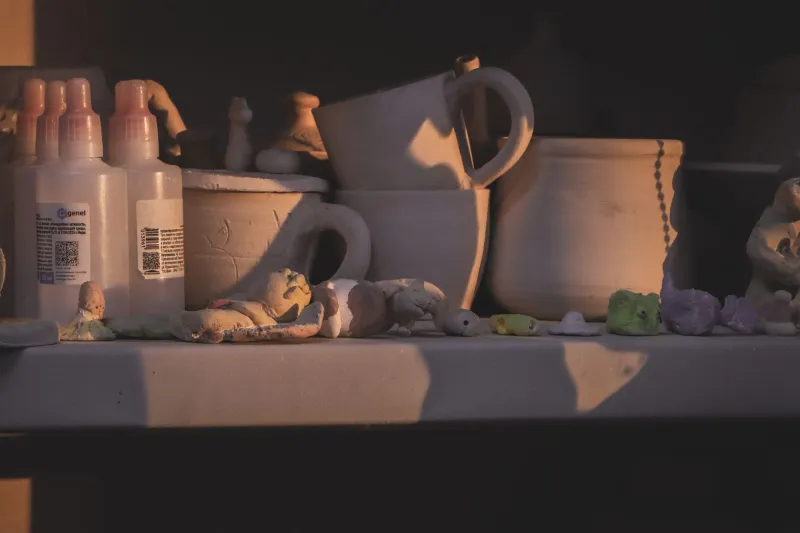
There's a pitcher on my kitchen shelf that doesn't match anything. It's a deep cobalt blue with a slightly uneven lip—handmade, clearly, by someone who wasn't aiming for perfection. I bought it at a Saturday flea market in Hudson, New York, from a vendor who told me it was from a small pottery studio that had since closed. I've had it for six years. I've moved twice. The pitcher came with me both times, wrapped carefully in a dish towel while more expensive things got left behind.
I think about why that is.
The Accumulation Hangover
For a particular stretch of the 2010s, the aesthetic ideal in American homes was a kind of curated abundance. Floating shelves lined with matching vessels. Every surface intentional but somehow also maximal. The look was achievable, thanks to a wave of fast-design retailers who could deliver the entire vibe of a thoughtfully assembled home in a single online cart.
And we bought it. Literally. We bought a lot of it.
What followed, for many people, was something that might be called an accumulation hangover—the strange emptiness of owning more than you need of things that don't quite resonate. The shelves looked right in photos. In person, they felt like a stage set. Beautiful, functional, forgettable.
The shift that's been quietly building since is less about minimalism—that particular aesthetic has its own rigidity—and more about meaning. Not fewer things for the sake of fewer things, but fewer things that are actually, genuinely yours.
What Objects Carry
There's a growing body of research on what psychologists call "extended self" theory—the idea that the objects we own become part of how we understand ourselves. The things we choose to keep, display, and live alongside aren't just decorative. They're autobiographical.
Which is why the inherited cast iron skillet feels different from the one you bought last year. Why the vintage lamp you found at an estate sale in your grandmother's hometown carries a weight that a newer version of the same shape simply doesn't. It's not sentimentality, exactly. It's something more structural—the way certain objects root you in a story that extends beyond your own individual life.
This is what fast design, by its very nature, cannot provide. A thing made to be replaced cannot hold the past. It can only gesture at a present moment that's already moving on.
The Vintage Find as a Form of Connection
America has always had a complicated relationship with old things. There's a cultural pull toward the new, the upgraded, the latest version. But there's also a long tradition—particularly in the South and in tight-knit immigrant communities—of objects passed down, repaired, kept.
What's interesting right now is that younger generations are gravitating toward that second tradition, not out of necessity but out of preference. The thrift store run, the estate sale Saturday, the Etsy search for handmade ceramics from an independent studio in Vermont—these aren't budget compromises. For a lot of people, they're the whole point.
Part of what's driving this is a hunger for provenance. To know where something came from. To sense that it existed before you and might exist after. In a world that often feels disposable and accelerating, an object with a past offers something quietly stabilizing.
There's also an ecological dimension that's hard to separate from the conversation. Choosing a secondhand piece over a new one is a small but concrete act of refusal—a vote against the churn of production and waste that fast design depends on. For thoughtful consumers, that alignment between values and purchasing decisions matters. The object becomes a reflection not just of taste, but of ethics.
Curation as Self-Knowledge
Building a home around meaningful objects requires something that's harder than it sounds: knowing what actually resonates with you, versus what you've been told should resonate with you.
The two can look remarkably similar from the outside. Both might result in a beautiful room. But one is assembled from genuine preference, accumulated slowly, and the other is assembled from trend-following, assembled quickly. Only one of them will feel like home in five years.
The practice of intentional curation—asking, before you bring something in, whether you genuinely love it or whether you love the idea of it—is a kind of ongoing self-knowledge project. It forces you to develop a point of view. To notice what you're drawn to across contexts. To understand your own aesthetic language well enough to trust it.
That's not a small thing. Most of us were never taught to develop that kind of relationship with our own taste. We were taught to want what was advertised, to upgrade when prompted, to equate newness with value. Unlearning that takes time and deliberate attention.
The Art of the Incomplete Room
One of the most liberating shifts in this philosophy is letting go of the finished room.
The traditional approach to decorating a home—especially in American consumer culture—is to complete it. To get to a point where everything matches, every surface is addressed, every corner has been considered. Done.
But a room assembled around meaningful objects is, by nature, never quite finished. You're waiting for the right piece. You're leaving space for the thing you haven't found yet. You're comfortable with the slightly bare wall because you know what's there now isn't right and you'd rather wait.
This patience is its own aesthetic. There's something honest about a room that's still becoming. It signals that the person who lives there is paying attention—not to trends, not to the pressure to have it all figured out—but to the slow accumulation of things that actually belong.
What Gets Left Behind
There's a grief in this, too, that's worth naming.
Choosing to live with less but better means letting things go. It means recognizing that the impulse buy from three apartments ago doesn't fit the life you're building now. It means the perfectly nice sofa that never quite felt right needs to find a different home so that the right one can eventually take its place.
That editing process—honest, ongoing, sometimes uncomfortable—is part of the practice. The goal isn't a perfect room. It's a room that reflects a considered life. One where the objects you've gathered around yourself tell a story you actually want to be living.
The cobalt pitcher on my kitchen shelf tells a small story. A Saturday in a town I love. A craftsperson I'll never meet. A choice to carry something fragile across two moves because it felt worth protecting.
That's enough. That's actually more than enough.